One Person, Three PCs, Eleven Days: I Made a 2h20m AI Film
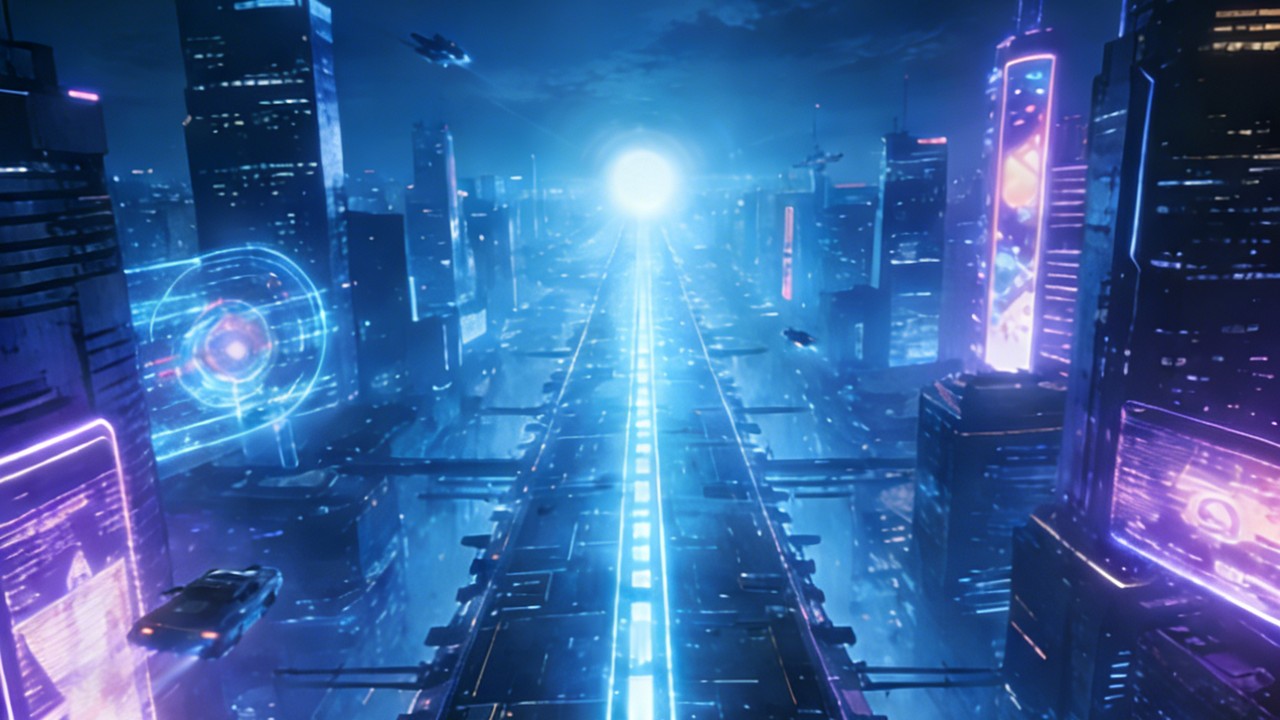
The film is done. From the first shot of the opening credits to the last line of the end credits—two hours, twenty minutes, and twenty-seven seconds. 2560×1440, thirty frames per second.
When most people hear "AI film" for the first time, what comes to mind is a ten-second showcase clip: a cyberpunk city, a mecha girl, the camera orbiting around a face. It looks good, but that's a sample, not a film.
A film has length. With length comes structure; with structure comes workload; with workload comes the need for engineering.
**I'm not a director—I'm a coder.**
That's not modesty. Of everything I did on this film, the least important part was "coming up with ideas."
What actually held up those two hours and twenty minutes was a pipeline that took a novel, character by character, into a database, and pulled each frame out line by line. It's not romantic, but it's re-runnable, checkable, reworkable, and handoffable to a second machine to keep going.
One person finishing a whole film has never been about fast hands. It's about **leaving no rework traps behind**.
**Three numbers.**
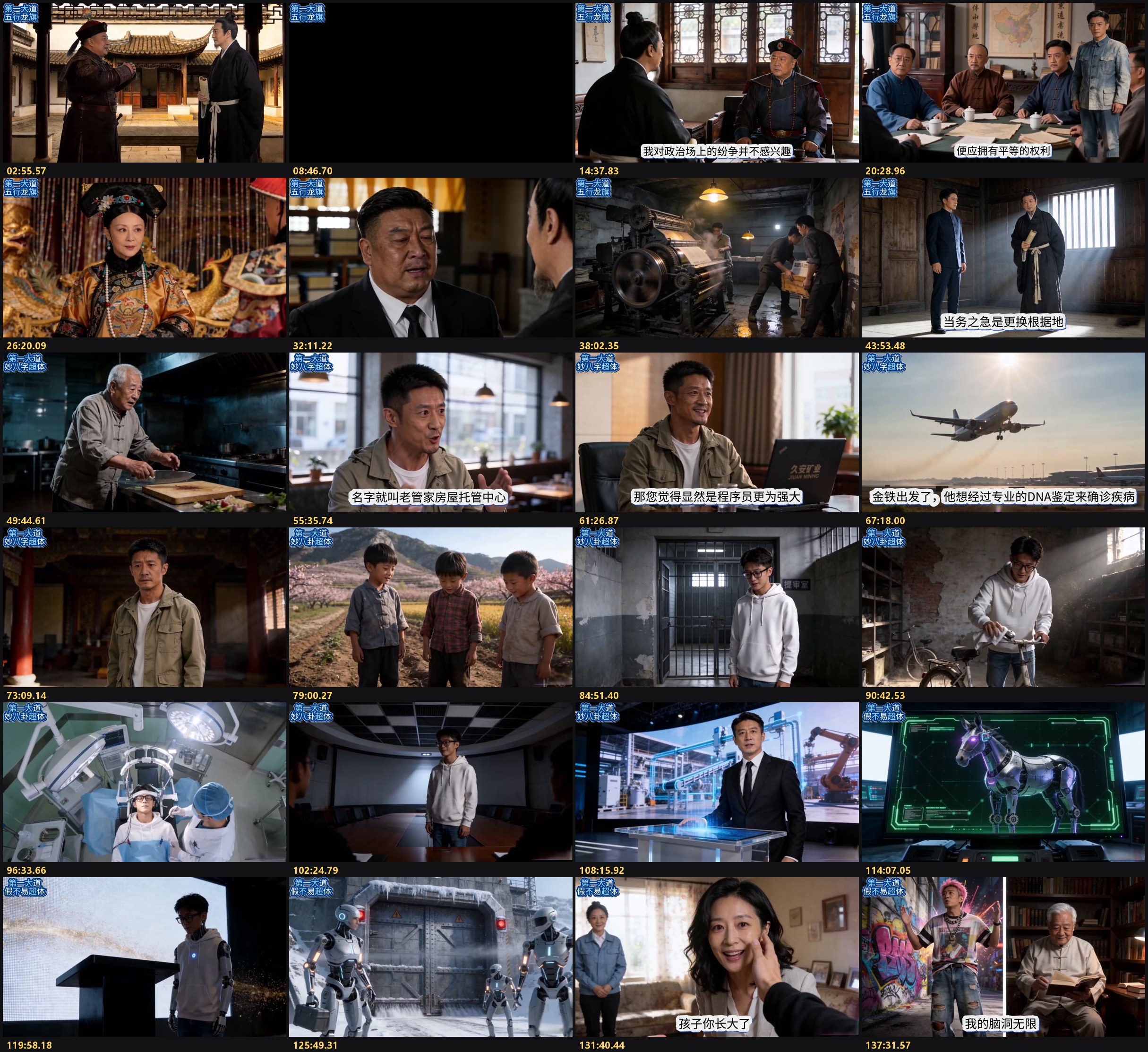
93,724 characters. That's the total word count of the source novel's main text—799 natural paragraphs, across four chapters.
1,029. That's the number of shots the film was broken into, averaging 5.6 seconds per shot, with a total storyboard duration of 5,804 seconds—just under 97 minutes. Shorter than the final cut, because the final cut also includes the opening, chapter transitions, and the end credits.
2:20:27. That's the final film: 8,427 seconds, 7.59 GB.
Three numbers, one sentence: **A 90,000-character novel, broken into 1,029 five-second fragments, then reassembled into two hours and twenty minutes.**
**How the three computers divided the work.**
One handled "thinking" and "managing": cutting the novel into storyboard shots, writing what each shot should show and say, line by line, into a table.
One handled "drawing": constantly pulling one image-generation task from the task list, generating frames, and sending them back.
The third handled "video": feeding the first and last frames into the video model to produce five-to-six-second clips.
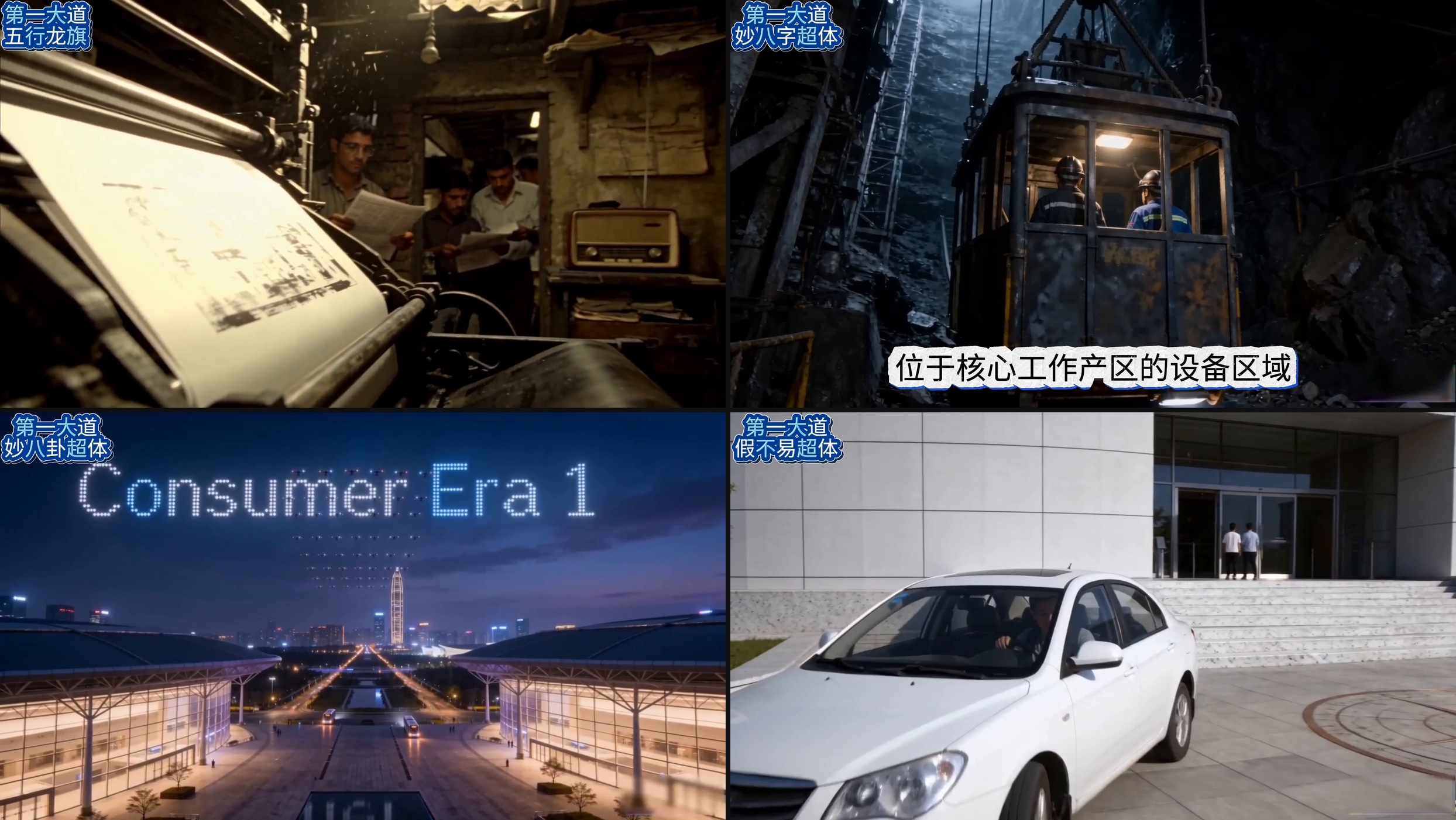
The three machines don't call each other, don't transfer files, and don't rely on a human yelling. They share one task ledger: whoever is free picks up a task, marks it "in progress" once taken, and it automatically returns if it times out. That's how one person can stand in for a whole team—**because scheduling isn't done by a human.**
**This isn't "generation." This is "assembly."**
This is the misconception I most want to correct.
An AI film isn't "type in a sentence, get a movie out." At least not at this stage.
It's more like printing: first you have the words (the novel), then the plate (the storyboard), then the paper (the frames), and finally the binding (the edit). Every step is deterministic—the only difference is that the tools have been replaced by models.
So it's replicable. That's good news and bad news: replicability means the barrier isn't inspiration—it's execution.
**I'll break it down piece by piece in the posts ahead.**
I've split this workflow into ten parts: the six steps from title to structure to storyboard; that addition where setting equals character plus location; how the 1,029 shots were cut; three prompt templates; three paths for generating frames; why the first and last frames must be a pair; the technical ledger for two hours and twenty minutes; the five places most likely to fall apart; and finally—whether any of this can be replicated by someone else.
If you also want to make a film alone, these ten posts are enough to lay your foundation.